
Cat Allergies
Allergies are one of the more common medical conditions seen in cats and can affect pets of any age or breed.
Cat Allergies
While some cats experience only mild seasonal itching, others may develop chronic skin problems, ear irritation, digestive upset, or ongoing discomfort that significantly affects their quality of life.
At Parkdale Animal Hospital, we understand how frustrating allergies can be for both cats and their owners. Allergies are often complex conditions that may require long-term management, careful monitoring, and individualized treatment plans. Because allergy symptoms can sometimes resemble other medical conditions, proper diagnosis and veterinary guidance are extremely important.
Cats with allergies may not always show obvious signs in the same way dogs do. Instead of constant scratching, many allergic cats develop excessive grooming habits, hair loss, scabs on the skin, ear irritation, or changes in behaviour due to discomfort. Some cats may even experience gastrointestinal symptoms such as vomiting or diarrhea related to food sensitivities.
Understanding the causes, symptoms, and treatment options for feline allergies can help owners recognize problems earlier and improve their cat’s comfort and overall well-being.
What Causes Allergies in Cats?
An allergy occurs when the immune system overreacts to a substance that would normally be harmless. These substances, known as allergens, trigger inflammation and irritation within the body.
Cats can develop allergies to many different things in their environment. Common allergens include pollen, grasses, dust mites, mold, fleas, and certain food ingredients. Some cats may react seasonally when pollen counts are high, while others experience symptoms year-round due to indoor allergens or food-related sensitivities.
Flea allergy dermatitis is one of the most common allergies seen in cats. Cats with flea allergies are extremely sensitive to flea saliva, and even a single flea bite can trigger intense itching and skin irritation.
Environmental allergies, often called atopic dermatitis, occur when cats react to allergens in their surroundings such as pollen, dust, mold, or grasses. These allergies may develop gradually over time and can become more noticeable as cats age.
Food allergies or food sensitivities occur when the immune system reacts to certain proteins or ingredients within the diet. Unlike seasonal allergies, food-related allergies often persist throughout the year and may involve both skin and gastrointestinal symptoms.
Some cats may also develop contact allergies, although these are less common. Contact allergies occur when the skin reacts directly to substances such as cleaning products, fabrics, litter materials, or certain shampoos.
Recognizing Allergy Symptoms in Cats
Cats often show allergy symptoms differently than dogs, which can sometimes make allergies harder to recognize.
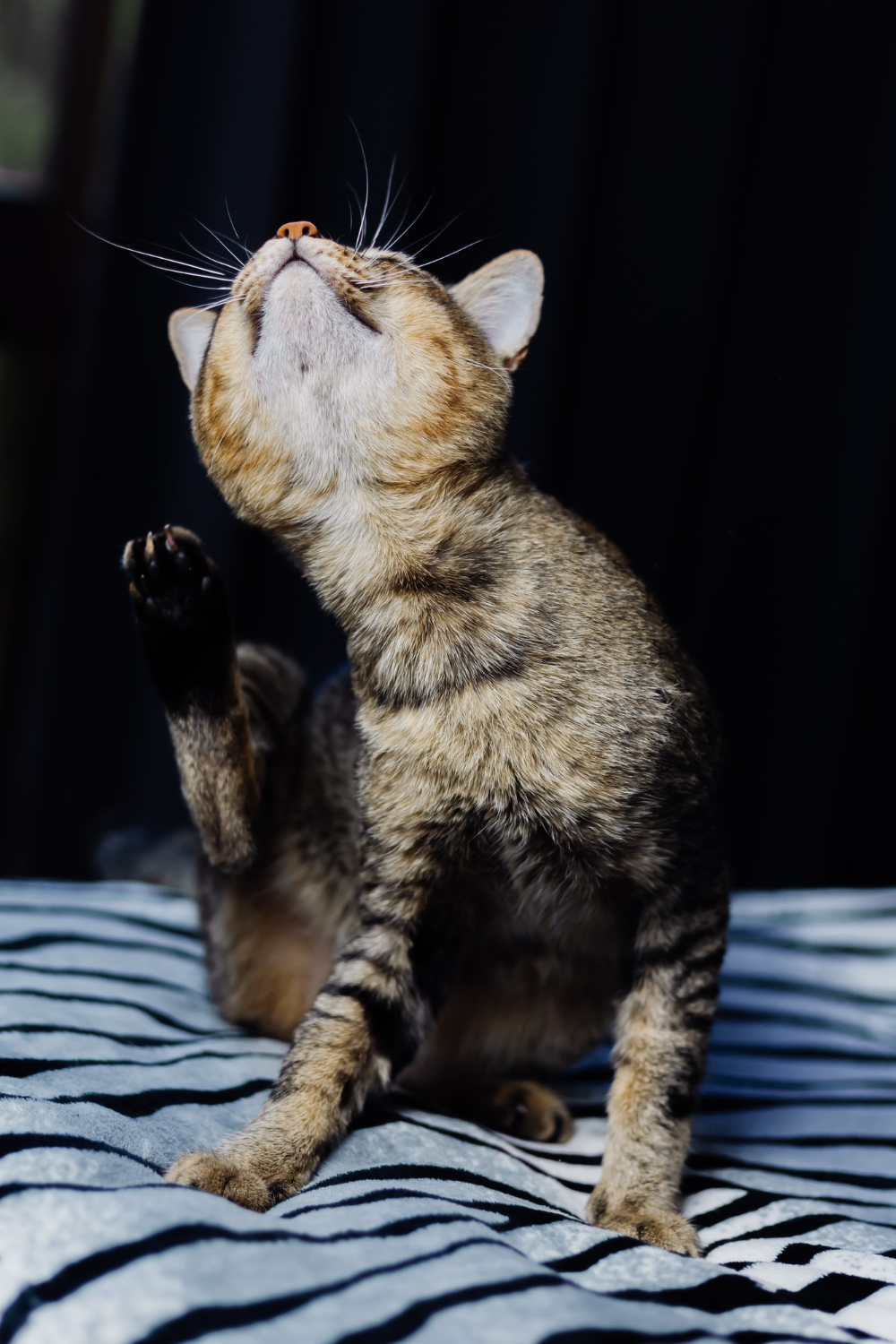
One of the most common signs of allergies in cats is excessive grooming. Many allergic cats lick, chew, or overgroom themselves to the point of causing hair loss or irritated skin. Owners may notice thinning fur on the abdomen, legs, or lower back.
Some cats develop small scabs or crusts on the skin, particularly around the head, neck, or back. This condition is commonly referred to as miliary dermatitis and is frequently associated with allergies.
Itching around the face, ears, or neck is also common. Cats may scratch excessively, shake their heads frequently, or develop recurring ear infections due to underlying allergies.
Skin redness, inflammation, sores, or thickened skin may develop over time, especially in cats experiencing chronic irritation.
Some allergic cats develop eosinophilic granuloma complex, a group of inflammatory skin lesions that may appear on the lips, skin, or inside the mouth.
Food allergies may also cause digestive symptoms such as vomiting, diarrhea, poor appetite, or weight loss in addition to skin problems.
Because many other medical conditions can cause similar symptoms, veterinary evaluation is important whenever ongoing itching, grooming changes, skin irritation, or digestive issues are noticed.
Flea Allergies in Cats
Flea allergy dermatitis is one of the most common and most uncomfortable allergic conditions in cats. Cats with flea allergies are highly sensitive to flea saliva, meaning even one or two flea bites can trigger severe itching and inflammation.
Many owners are surprised to learn their cat has a flea allergy because they may never actually see fleas. Cats groom themselves very efficiently and may remove fleas before owners notice them. Indoor cats can also develop flea infestations, especially if fleas are brought inside on clothing, other pets, or wildlife.
Cats with flea allergies commonly develop itching and hair loss around the lower back, tail base, abdomen, and hind legs. Some cats may develop scabs, sores, or skin infections from excessive grooming and scratching.
Year-round flea prevention is one of the most important parts of managing flea allergies. Because even minimal exposure can trigger symptoms, consistent parasite control is critical for allergic cats.
At Parkdale Animal Hospital, we can recommend safe and effective flea prevention products tailored to your cat’s needs and lifestyle.
Environmental Allergies in Cats
Environmental allergies occur when cats react to substances such as pollen, mold, dust mites, or grasses in their environment.
Some cats experience seasonal allergies, where symptoms worsen during certain times of the year when pollen levels are higher. Other cats experience year-round symptoms due to indoor allergens such as dust mites or mold spores.
Environmental allergies in cats commonly affect the skin, ears, and grooming behaviour. Excessive licking, chewing, scratching, ear irritation, and hair loss are all common signs.
Unlike humans, cats with allergies do not typically develop sneezing and watery eyes as their primary symptoms. Instead, skin irritation and overgrooming are often the most noticeable signs.
Managing environmental allergies often involves reducing allergen exposure when possible while also controlling inflammation and itchiness through medical treatment and supportive care.
Because allergies are usually lifelong conditions, management rather than complete cure is often the goal.
Food Allergies and Food Sensitivities
Food allergies and food sensitivities can occur in cats of any age, even if they have been eating the same diet for years.
Food-related allergies most commonly involve proteins such as chicken, beef, fish, or dairy products, although virtually any ingredient has the potential to trigger a reaction.
Cats with food allergies often develop skin symptoms such as itching, overgrooming, hair loss, or skin inflammation. Some may also experience vomiting, diarrhea, gas, or poor stool quality.
Diagnosing food allergies can be challenging because there is no simple blood test that reliably confirms food allergies in cats. Instead, veterinarians often recommend a strict elimination diet trial using a prescription hypoallergenic or novel protein diet.
During a food trial, cats must eat only the prescribed diet for several weeks without treats, table scraps, flavored medications, or other foods. Even small exposures to other ingredients can interfere with results.
While food trials require patience and consistency, they are often one of the most effective ways to identify dietary triggers and improve long-term comfort for allergic cats.
Diagnosing Allergies in Cats
Diagnosing allergies can sometimes take time because many conditions can cause similar symptoms.
Your veterinarian will begin with a thorough medical history and physical examination. Questions about your cat’s diet, lifestyle, environment, grooming habits, flea prevention, and symptom patterns can provide important clues.
Because flea allergies are so common, flea control is often one of the first steps in the diagnostic process, even for indoor cats.
Additional testing may sometimes be recommended to rule out other conditions such as skin infections, mites, fungal infections, hormonal disorders, or other medical problems.
Food elimination trials may be used if food allergies are suspected.
In some cases, allergy testing may be recommended for cats with environmental allergies. This testing is generally used to help formulate allergy immunotherapy rather than diagnose allergies on its own.
Because allergies can be complicated and symptoms may overlap between multiple conditions, diagnosis often involves ruling out other causes while monitoring how cats respond to treatment and management strategies.
Treating and Managing Allergies in Cats
The treatment approach for allergies depends on the type of allergy, the severity of symptoms, and the individual cat.
The primary goals of allergy treatment are reducing itchiness, controlling inflammation, preventing secondary infections, and improving quality of life.
For flea allergies, strict year-round flea prevention is essential. Environmental treatment of the home may also be necessary in some situations.
Cats with environmental allergies may benefit from medications designed to reduce inflammation and itching. Depending on the severity of symptoms, treatment options may include anti-inflammatory medications, immune-modulating therapies, or allergy immunotherapy.
Some cats benefit from medicated shampoos, wipes, or topical treatments, although grooming products must always be selected carefully because cats are sensitive groomers and may ingest products through licking.
For food allergies, long-term dietary management is often the most important treatment.
Secondary skin or ear infections are common in allergic pets and may require additional treatment with antibiotics, antifungal medications, or ear medications.
Because allergies are often chronic conditions, treatment plans may need adjustment over time depending on seasonal changes, flare-ups, or changes in symptoms.
The Impact of Allergies on Quality of Life
Chronic itching and discomfort can significantly affect a cat’s quality of life. Cats experiencing ongoing irritation may become withdrawn, irritable, restless, or less social than usual.
Excessive grooming and skin irritation can also lead to pain, skin infections, sleep disruption, and stress for both pets and owners.
Many owners are surprised by how much improvement they notice in their cat’s mood, behaviour, and comfort once allergies are better controlled.
Early intervention and consistent management can help reduce flare-ups and prevent chronic skin damage over time.
Preventing Allergy Flare-Ups
While allergies cannot always be prevented completely, there are ways to help reduce flare-ups and improve comfort for allergic cats.
Consistent flea prevention is one of the most important preventive measures, even for indoor cats.
Maintaining regular veterinary care allows allergy symptoms to be monitored and treatment plans adjusted when needed.
Feeding high-quality diets
Owners should avoid using over-the-counter medications or products without veterinary guidance, as some human medications and topical products can be dangerous for cats.
Supporting Long-Term Comfort for Allergic Cats
Living with allergies can be frustrating, but with proper management, many cats are able to live comfortable and happy lives.
Because every cat is different, allergy management often requires an individualized approach tailored to your pet’s specific symptoms, triggers, and lifestyle.
At Parkdale Animal Hospital, we work closely with cat owners to diagnose allergy concerns, develop long-term management plans, and help improve quality of life for pets experiencing chronic itching or skin irritation.
Schedule an Allergy Consultation
If your cat is excessively grooming, scratching, developing hair loss, or showing signs of skin irritation, allergies may be contributing to the problem.
To learn more about feline allergies or to schedule an examination, contact Parkdale Animal Hospital by phone at 519-885-1200 or click here.