
Cat Dental Care
Dental care is one of the most important parts of keeping your cat healthy and comfortable throughout their life.
Why Your Cat’s Oral Health Matters
Many cat owners are surprised to learn that dental disease is one of the most common medical conditions seen in cats. By the age of three, most cats already have some degree of dental disease, even if they continue to eat normally and behave as though nothing is wrong.
Cats are extremely skilled at hiding pain and discomfort. In the wild, showing weakness could make an animal vulnerable, and that instinct remains strong in domestic cats today. As a result, many cats continue eating and acting relatively normally despite significant oral pain. Because of this, dental disease often goes unnoticed until it becomes advanced.
Healthy teeth and gums are important for far more than just fresh breath. Dental disease can cause chronic pain, inflammation, infection, tooth loss, and reduced quality of life. Poor oral health may also contribute to problems affecting other parts of the body, including the kidneys, liver, and heart.
The good news is that most dental disease can be prevented or managed with regular veterinary care and proper home dental maintenance. Understanding the basics of dental care can help your cat live a healthier, happier, and more comfortable life.
Why Dental Health Matters in Cats
Your cat relies on their mouth every day for eating, grooming, carrying toys, communicating, and exploring their environment. When dental disease develops, even simple daily activities can become uncomfortable or painful.
Dental disease usually begins with plaque, which is a sticky film of bacteria that naturally forms on the teeth after eating. If plaque is not removed regularly, it hardens into tartar. Bacteria then accumulate beneath the gumline, leading to inflammation and infection of the gums and tissues surrounding the teeth.
Over time, this inflammation damages the structures supporting the teeth, including the gums, ligaments, and jawbone. Teeth may loosen, fracture, or become infected. In some cases, bacteria from the mouth may enter the bloodstream and contribute to inflammation elsewhere in the body.
Unlike people, cats rarely complain when they are uncomfortable. A cat with severe dental disease may still eat regularly because hunger overrides pain. Some cats simply learn to chew differently or swallow food whole to avoid discomfort. This is why dental disease can become very advanced before owners notice any obvious symptoms.
Regular dental care helps reduce pain, prevent infection, preserve healthy teeth, and improve overall wellbeing. Many owners notice that after dental treatment, their cat becomes more playful, social, active, and affectionate because chronic oral pain has finally been relieved.
Common Dental Problems in Cats
Periodontal Disease
Periodontal disease is the most common dental condition diagnosed in cats. It affects the tissues surrounding and supporting the teeth, including the gums and jawbone.
The earliest stage of periodontal disease is gingivitis, which involves inflammation and redness along the gumline. If untreated, the inflammation spreads deeper below the gums and begins damaging the structures that anchor the teeth in place.
As periodontal disease progresses, cats may develop painful infections, gum recession, bone loss, and loose teeth. Advanced disease can cause chronic pain even when a cat appears outwardly normal.
Many owners are surprised to learn how common periodontal disease is because the signs can be subtle. Cats may continue eating despite significant discomfort. In some cases, bad breath is the only noticeable symptom.
Tooth Resorption
Tooth resorption is another very common and painful dental condition in cats. In this disease, the body begins breaking down and destroying the tooth structure itself.
These lesions often develop below the gumline, making them difficult or impossible to detect during an awake examination. Cats with tooth resorption frequently experience severe pain, particularly when the affected tooth is touched or used while eating.
Some cats develop visible defects in the teeth, while others show only mild behavioural changes. Dental X-rays are extremely important because they allow veterinarians to identify affected teeth hidden beneath the gums.
The exact cause of tooth resorption is still not fully understood, but the condition is extremely common in adult cats.
Gingivitis
Gingivitis refers specifically to inflammation of the gums. It is often the earliest stage of dental disease and may be reversible if identified and treated early.
Cats with gingivitis typically develop redness and swelling along the gumline. The gums may bleed easily, and the mouth may become increasingly uncomfortable over time.
Although gingivitis may initially seem mild, it should not be ignored. Without treatment, it can progress into more advanced periodontal disease that causes permanent damage to the teeth and supporting tissues.
Stomatitis
Feline stomatitis is a severe and painful inflammatory condition affecting the tissues inside the mouth. Cats with stomatitis develop intense inflammation that may involve the gums, cheeks, tongue, and back of the throat.
This condition can make eating extremely painful. Some affected cats stop eating altogether, while others may cry out while chewing or avoid grooming themselves due to discomfort.
The exact cause of stomatitis is not fully understood, but it is believed to involve an abnormal immune response to plaque bacteria on the teeth.
Treatment may involve professional dental care, medications, ongoing management, and in some cases, extraction of affected teeth to improve comfort and quality of life.
Signs of Dental Disease in Cats
Dental disease can be difficult to recognize because cats instinctively hide pain. Many signs are subtle and develop gradually over time.
One of the most common signs owners notice is bad breath. While many people assume “cat breath” is normal, strong or foul-smelling breath often indicates underlying dental disease or infection.
Cats with oral pain may also begin eating differently. Some cats chew only on one side of the mouth, drop food while eating, or suddenly prefer softer foods. Others may approach their food bowl eagerly but hesitate once they begin eating because chewing is painful.
Changes in grooming habits are also common. Cats experiencing oral discomfort may groom less frequently, leading to a scruffy or unkempt coat. Some cats become quieter, hide more often, or seem irritable when touched around the face.
Additional signs of dental disease may include drooling, pawing at the mouth, bleeding from the gums, facial swelling, weight loss, or visible tartar buildup on the teeth.
Even if your cat shows no obvious symptoms, regular dental examinations remain important because significant disease may still be present below the gumline.
The Importance of Professional Dental Exams
Routine veterinary examinations are essential for maintaining your cat’s oral health. During an exam, your veterinarian evaluates the teeth, gums, tongue, and oral tissues for signs of disease.
However, it is important to understand that many dental problems cannot be fully assessed while a cat is awake. Much of the tooth structure lies beneath the gums, and painful lesions are often hidden from view.
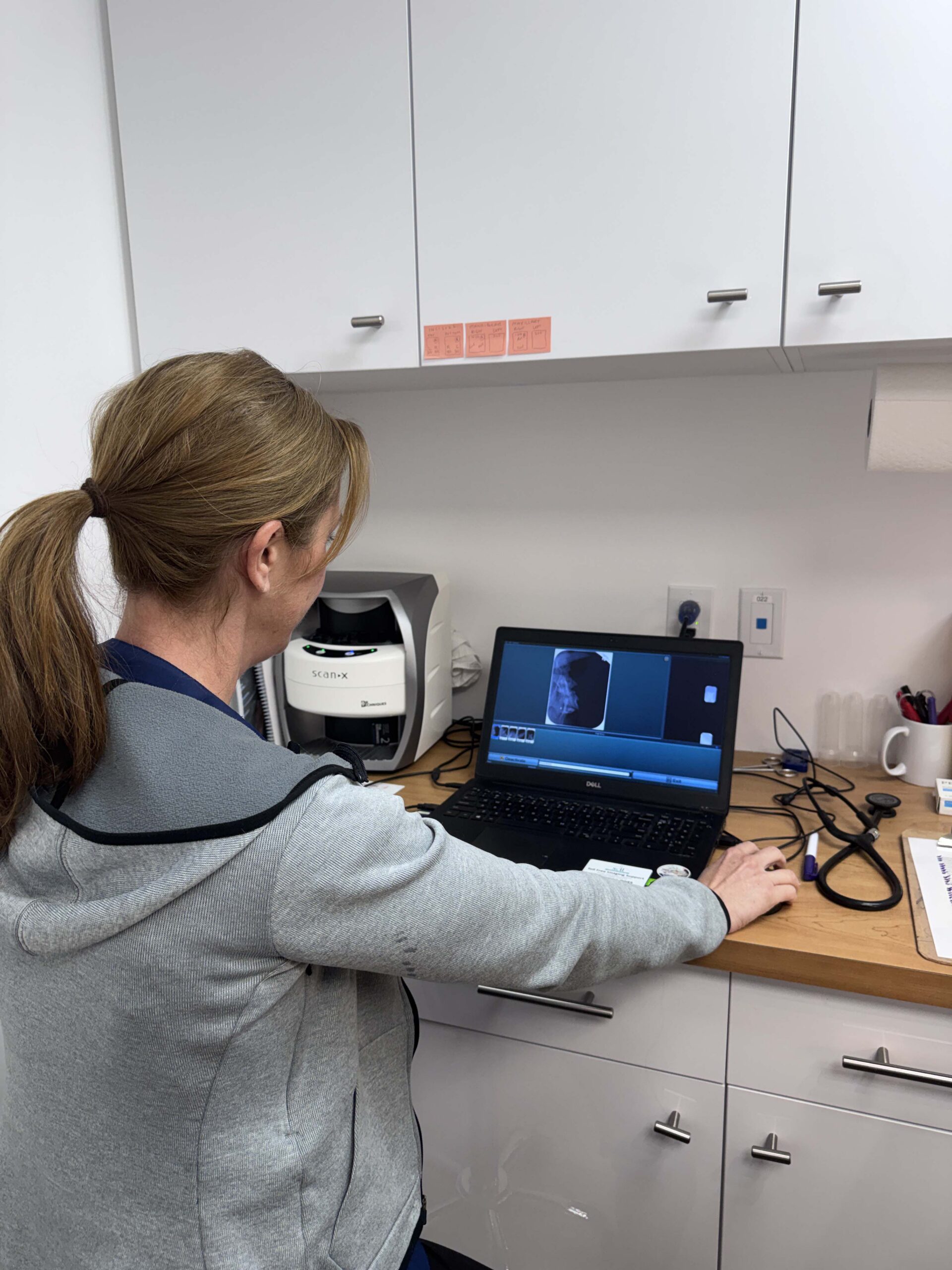
Professional dental procedures performed under general anesthesia allow for a thorough oral examination, complete cleaning, and dental X-rays. Dental radiographs are particularly important because they reveal disease below the gumline that cannot otherwise be detected.
Studies have shown that a significant percentage of dental disease in cats is hidden beneath the surface. Teeth that appear normal externally may actually have severe root disease or painful resorptive lesions.
Early diagnosis and treatment help prevent unnecessary pain and reduce the likelihood of more serious complications later on.
What Happens During a Professional Dental Cleaning?
A professional dental cleaning is much more comprehensive than simply removing tartar from visible tooth surfaces.
Before anesthesia, your veterinarian performs a physical examination and may recommend bloodwork to evaluate your cat’s overall health and reduce anesthetic risk.
Once anesthetized, each tooth is carefully examined. Dental X-rays are taken to evaluate the roots and surrounding bone structures. Plaque and tartar are removed both above and below the gumline using specialized dental equipment.
The teeth are then polished to smooth the enamel surface and help slow future plaque accumulation. If severely diseased or painful teeth are identified, extractions may be recommended to improve comfort and prevent ongoing infection.
Throughout the procedure, your cat is carefully monitored by trained registered veterinary technicians (RVTs) to maintain safety and comfort.
Many owners are understandably nervous about anesthesia, especially for older cats. However, modern anesthetic monitoring and individualized protocols make professional dental procedures very safe for the vast majority of patients.
Home Dental Care for Cats
Home dental care plays an important role in reducing plaque buildup and maintaining oral health between professional cleanings for cats.
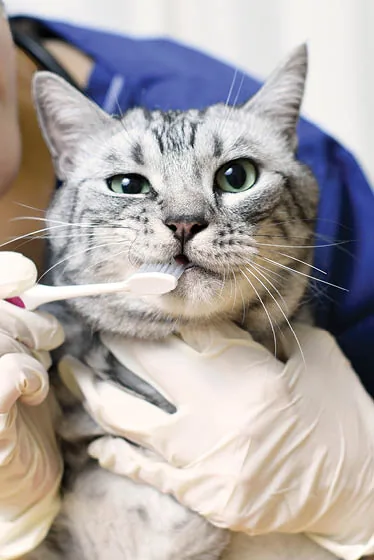
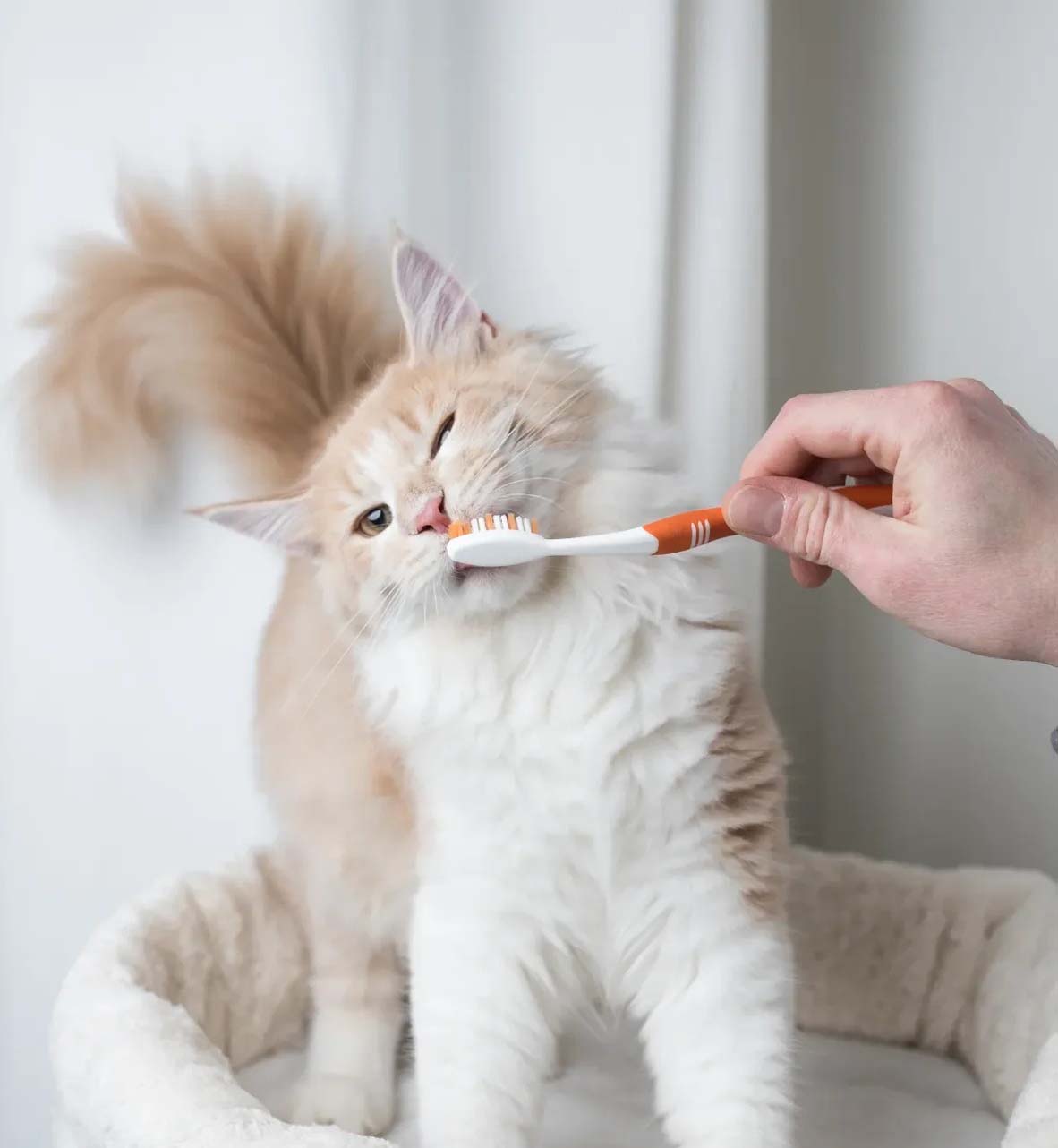
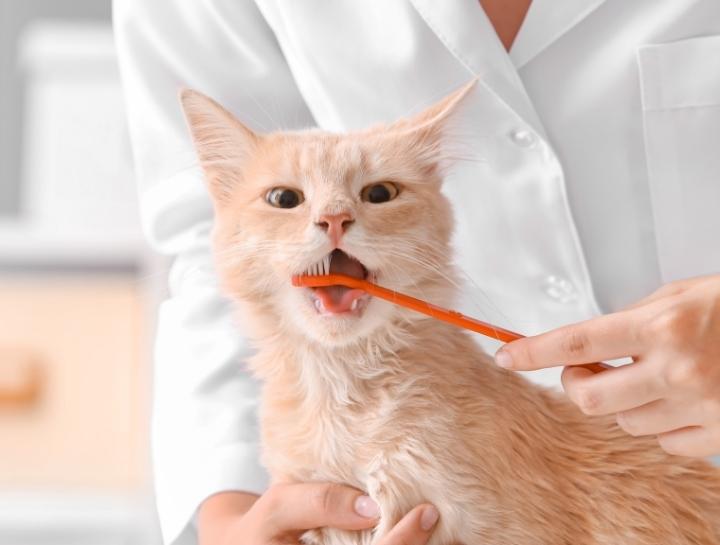
Brushing your cat’s teeth is considered the most effective form of home dental care. While many owners assume cats will never tolerate brushing, many cats can learn to accept it gradually with patience and positive reinforcement.
It is best to start slowly by allowing your cat to become comfortable with having their mouth touched. Once they are relaxed, a veterinary toothpaste and soft toothbrush or finger brush can be introduced.
Human toothpaste should never be used because it may contain ingredients that are unsafe for cats.
Consistency is important. Daily brushing provides the greatest benefit, although even brushing several times weekly can help reduce plaque accumulation.
Dental diets, treats, and water additives may also help support oral health in cats. Products approved by the Veterinary Oral Health Council are generally preferred because they have been evaluated for effectiveness.
Home care alone cannot replace professional dental cleanings, but it can significantly slow the progression of dental disease and improve long-term oral health.
Myths About Cat Dental Care
One common misconception is that dry food automatically cleans a cat’s teeth. While some specially formulated dental diets may help reduce plaque accumulation, regular kibble alone usually provides minimal cleaning benefit.
Another myth is that bad breath is normal in cats. Persistent bad breath is often one of the earliest signs of dental disease and should not be ignored.
Some owners also believe that if a cat is still eating, their mouth cannot be painful. Unfortunately, this is not true. Cats often continue eating despite severe oral discomfort because their survival instincts encourage them to keep consuming food whenever possible.
There is also a misconception that professional dental cleanings are purely cosmetic. In reality, veterinary dental procedures are medical treatments designed to identify and treat painful disease below the gumline.
Preventing Dental Disease in Cats
Preventive care is the best way to protect your cat’s oral health.
Regular veterinary examinations allow dental disease to be identified early before it becomes severe or painful. Professional dental cleanings help remove plaque and tartar while allowing hidden disease to be detected with dental X-rays.
At home, consistent dental care helps reduce bacterial buildup and maintain healthier teeth and gums. Even small efforts, such as introducing tooth brushing gradually or using approved dental products, can make a meaningful difference over time.
Nutrition, routine wellness care, and early intervention all contribute to maintaining good oral health throughout your cat’s life.
Final Thoughts
Dental disease is one of the most common health problems affecting cats, yet it often goes unnoticed until it becomes advanced. Because cats naturally hide pain, even serious oral disease may be difficult for owners to recognize at home.
Maintaining good dental health is about far more than fresh breath. Healthy teeth and gums help your cat eat comfortably, groom properly, and enjoy a better quality of life. Regular veterinary dental care, combined with home maintenance, can significantly reduce pain, infection, and long-term complications.
If you notice bad breath, changes in eating habits, drooling, or any other signs of oral discomfort, it is important to schedule a veterinary examination. Early treatment can make a tremendous difference in your cat’s comfort and overall health.
At Parkdale Animal Hospital, we believe dental care is an essential part of preventive medicine. Our team is committed to helping cats maintain healthy mouths and comfortable lives through comprehensive dental evaluations, professional cleanings, dental X-rays, and personalized home care recommendations.
If you have concerns about your cats oral health or want to book an consultation to learn more, please contact us at 519-885-1200 or click here.