
Dog Cardiology
Heart disease is one of the more common medical conditions seen in dogs, particularly as they grow older.
Dog Cardiology
Some cardiac diseases develop slowly over many years with only subtle early warning signs, while others may progress more rapidly and significantly affect a dog’s breathing, energy levels, and overall quality of life.
At Parkdale Animal Hospital, we understand how concerning it can be for owners to hear that their dog has a heart murmur or possible heart disease. Many families feel anxious and uncertain after learning their dog may have a cardiac condition, especially when their pet still appears relatively normal at home.
The good news is that many dogs with heart disease can continue to live happy, comfortable lives for months or even years with appropriate monitoring and treatment. Early detection plays an extremely important role in managing cardiac disease successfully, which is why routine examinations and ongoing monitoring are so valuable.
Our veterinary team provides comprehensive cardiac assessments focused on identifying heart disease early, monitoring progression carefully, and helping families understand what to expect as their dog’s condition changes over time.
Understanding Heart Disease in Dogs
The heart is responsible for circulating oxygen-rich blood throughout the body. When heart disease develops, the heart may no longer pump blood as efficiently as it should. Depending on the specific condition, this can eventually lead to fluid accumulation, reduced oxygen delivery, abnormal heart rhythms, fatigue, breathing difficulty, or exercise intolerance.
Heart disease in dogs can be congenital or acquired. Congenital heart disease refers to abnormalities present at birth, while acquired heart disease develops later in life. Many acquired cardiac conditions become increasingly common as dogs age.
Some forms of heart disease affect the heart valves, while others affect the heart muscle itself or interfere with the electrical signals that regulate heartbeat rhythm.
One of the challenging aspects of cardiac disease is that dogs are often very good at hiding symptoms during the early stages. Many dogs compensate remarkably well for heart dysfunction until the disease becomes more advanced. As a result, subtle signs are sometimes easy for owners to miss initially.
This is one reason routine veterinary examinations are so important, particularly for middle-aged and senior dogs.
Common Signs of Heart Disease in Dogs
The symptoms associated with heart disease can vary significantly depending on the specific condition, severity of disease, and individual patient.
One of the most common early signs owners notice is coughing. Cardiac-related coughing often occurs more frequently at night, during rest, or after excitement or exercise. However, coughing can also be associated with respiratory disease, airway problems, or other medical conditions, so proper evaluation is important.
Exercise intolerance is another common symptom. Dogs with heart disease may tire more easily during walks, become reluctant to exercise, or struggle to keep up with activities they previously enjoyed.
As cardiac disease progresses, some dogs develop more noticeable breathing changes. Owners may observe rapid breathing at rest, increased respiratory effort, panting, weakness, or episodes of collapse.
Additional signs of heart disease may include decreased stamina, restlessness at night, poor appetite, weight loss, abdominal enlargement due to fluid accumulation, or generalized lethargy.
Importantly, some dogs with significant cardiac disease show very few outward symptoms during the early stages. A heart murmur detected during a routine examination may be the first indication that further investigation is needed.
Heart Murmurs in Dogs
One of the most common reasons dogs are referred for cardiac evaluation is the discovery of a heart murmur during a physical examination.
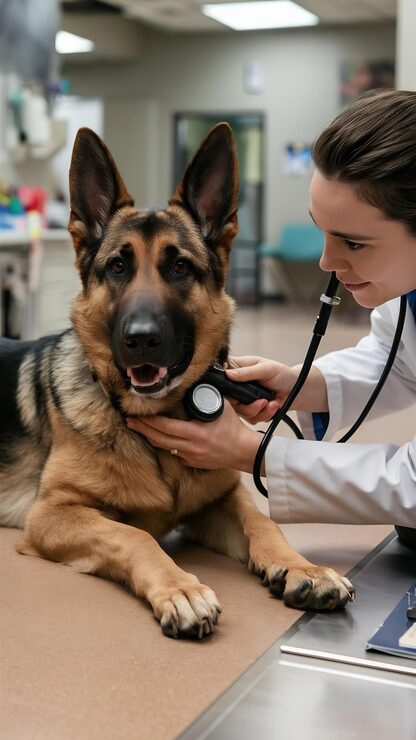
A heart murmur is an abnormal sound heard while listening to the heart with a stethoscope. Instead of the normal smooth heartbeat sounds, turbulent blood flow within the heart creates an additional audible noise.
Hearing a murmur does not automatically mean a dog has severe heart disease. Some murmurs are relatively mild and may remain stable for long periods of time, while others indicate more significant underlying cardiac problems.
Heart murmurs are graded based on their intensity, but the loudness of a murmur does not always perfectly correlate with disease severity. Even softer murmurs can sometimes be associated with important cardiac changes.
Several different conditions may cause heart murmurs, including degenerative valve disease, congenital abnormalities, cardiomyopathy, anemia, or changes in blood flow dynamics.
Because murmurs themselves do not provide a complete diagnosis, additional testing is often recommended to determine the underlying cause and assess the overall health of the heart.
Degenerative Valve Disease
Degenerative valve disease is one of the most common forms of heart disease diagnosed in dogs, particularly in small and medium-sized breeds.
This condition occurs when the heart valves gradually thicken and become less effective over time. Normally, heart valves help maintain one-way blood flow through the heart. When the valves become diseased, blood may begin leaking backward with each heartbeat.
The mitral valve is most commonly affected. As valve disease progresses, the heart must work harder to compensate for inefficient blood flow. Over time, enlargement of the heart and eventually congestive heart failure may develop.
Many dogs with early degenerative valve disease remain symptom-free for extended periods. In fact, a heart murmur may be detected years before clinical signs appear.
Monitoring progression through regular examinations and diagnostic imaging is extremely important because treatment recommendations often change as the disease advances.

Dilated Cardiomyopathy
Dilated cardiomyopathy, commonly called DCM, is a disease affecting the heart muscle itself. In dogs with DCM, the heart muscle becomes weakened and enlarged, reducing the heart’s ability to pump blood effectively.
This condition is more common in certain larger breeds, although it can occur in a wide range of dogs.
Dogs with DCM may develop weakness, exercise intolerance, collapse episodes, abnormal heart rhythms, or signs of congestive heart failure. Some dogs experience sudden onset symptoms, while others develop gradual changes over time.
Because DCM can significantly affect cardiac function, early diagnosis and ongoing monitoring are important for improving quality of life and guiding treatment decisions.
Congestive Heart Failure in Dogs
Congestive heart failure does not mean the heart has completely stopped working. Instead, it refers to a stage of cardiac disease where the heart can no longer circulate blood effectively enough to prevent fluid accumulation.
Fluid may accumulate within the lungs, around the lungs, or within the abdomen depending on the underlying disease process. Dogs with congestive heart failure often develop coughing, increased breathing effort, rapid respiratory rate, weakness, or difficulty exercising.
Many owners first notice that their dog seems restless at night, breathes faster while sleeping, or tires much more easily than usual.
Congestive heart failure is a serious medical condition, but many dogs respond very well to medications that help remove excess fluid and support cardiac function.
With appropriate treatment and careful monitoring, many dogs continue enjoying a good quality of life for significant periods of time following diagnosis.

Arrhythmias and Abnormal Heart Rhythms
The heart relies on carefully coordinated electrical signals to maintain a normal rhythm. Arrhythmias occur when these electrical impulses become abnormal or irregular.
Some arrhythmias are relatively harmless, while others can interfere with blood circulation and increase the risk of weakness, collapse, or sudden cardiac events.
Dogs with arrhythmias may experience intermittent symptoms that are difficult to detect at home. Some owners notice episodes of weakness, fainting, unusual fatigue, or periods where their dog suddenly seems disoriented or unstable.
Electrocardiograms, commonly called ECGs, are often used to evaluate heart rhythm abnormalities and help guide treatment recommendations.
Diagnostic Testing for Heart Disease
Because many cardiac conditions produce similar symptoms, diagnostic testing is an important part of accurately evaluating heart health.
At Parkdale Animal Hospital, cardiac evaluations typically begin with a detailed physical examination and discussion of your dog’s medical history and symptoms.
Chest radiographs help evaluate heart size, lung changes, and the presence of fluid accumulation. Radiographs are often extremely useful for assessing dogs with coughing or breathing changes.
Blood pressure monitoring may also be recommended, as abnormal blood pressure can significantly affect cardiac health and disease progression.
Electrocardiograms evaluate the electrical activity of the heart and help identify abnormal heart rhythms.
In some cases, additional blood testing may help assess overall organ function and identify conditions that could affect the cardiovascular system.
Diagnostic imaging allows veterinarians to gather important information about how well the heart is functioning and whether treatment is needed immediately or ongoing monitoring is more appropriate.
Managing Heart Disease in Dogs
Treatment plans for heart disease vary widely depending on the specific diagnosis, stage of disease, and overall health of the patient.
Many dogs with mild or early-stage disease require monitoring before medications become necessary. Others benefit from medical intervention immediately following diagnosis.
Common treatment goals include improving circulation, reducing fluid accumulation, supporting heart function, controlling blood pressure, and improving overall comfort and quality of life.
Prescription medications may help reduce strain on the heart, improve pumping efficiency, or remove excess fluid from the body.
Weight management is also important because excess body weight can place additional stress on the cardiovascular system. Nutritional support and carefully controlled exercise recommendations may help support overall cardiac health.
While some owners worry that a heart disease diagnosis means their dog can no longer enjoy normal activities, many dogs continue participating in regular daily routines with only moderate lifestyle adjustments.

Monitoring Dogs with Heart Disease at Home
Owners play an extremely important role in monitoring dogs with cardiac disease between veterinary visits.
One of the most valuable things owners can monitor is resting respiratory rate. Increases in breathing rate during sleep or rest may indicate worsening fluid accumulation or disease progression.
Changes in coughing frequency, appetite, energy levels, exercise tolerance, or breathing effort should also be monitored closely.
Dogs experiencing worsening cardiac disease may become more tired during walks, reluctant to exercise, or restless at night.
Prompt veterinary attention is important if symptoms suddenly worsen or new breathing difficulties develop.
Regular recheck examinations allow us to monitor disease progression and adjust treatment plans as needed over time.
Heart Disease in Senior Dogs
Cardiac disease becomes increasingly common as dogs age. Many senior dogs develop subtle heart changes long before obvious symptoms appear.
Routine wellness examinations are especially important in older pets because heart murmurs and early cardiac abnormalities are often first identified during regular physical examinations.
Early detection may allow treatment and monitoring to begin before severe symptoms develop, helping preserve quality of life for as long as possible.
Senior dogs may also have multiple medical conditions occurring simultaneously, making individualized treatment planning especially important.
Access to a Board-Certified Veterinary Cardiologist
Some dogs with heart disease benefit from advanced cardiac diagnostics and consultation with a veterinary cardiology specialist. At Parkdale Animal Hospital, we collaborate with a traveling board-certified veterinary cardiologist who provides consultation services and advanced cardiac testing at our hospital.
This specialist is not a permanent member of our daily veterinary team and travels throughout Southwestern Ontario providing cardiology services at participating clinics. When advanced cardiac testing such as an echocardiogram (cardiac ultrasound) or electrocardiogram (ECG) is recommended, our team coordinates directly with the cardiologist to arrange an appointment based on her visiting schedule and availability.
This collaborative approach allows many pets to receive specialized cardiac care in a familiar environment without needing to travel to a large referral hospital. For many dogs and owners, remaining in a familiar clinic setting can help reduce stress while still providing access to advanced diagnostics and expert cardiac evaluation.
Cardiac ultrasounds are especially valuable for evaluating heart structure and function in dogs with murmurs, suspected congestive heart failure, arrhythmias, or other complex cardiac conditions. These assessments provide detailed information that helps guide diagnosis, prognosis, monitoring, and long-term treatment planning.
Following the consultation, the cardiologist’s findings and recommendations are shared directly with our veterinary team so we can continue your dog’s care with a coordinated and informed treatment plan. This allows us to maintain continuity of care while ensuring your pet benefits from specialized cardiac expertise when needed.
Our goal is to provide compassionate, collaborative cardiac care focused on supporting your dog’s comfort, health, and quality of life throughout every stage of heart disease management.
Compassionate Cardiac Care at Parkdale Animal Hospital
At Parkdale Animal Hospital, we understand that learning your dog may have heart disease can feel overwhelming and emotional. Many owners worry about what the diagnosis means for their pet’s future and how quickly the disease may progress.
Our veterinary team is committed to providing compassionate, evidence-based cardiac care focused on maintaining comfort, monitoring progression carefully, and supporting both pets and their families throughout every stage of disease management.
We believe owner education is an important part of cardiac care. Understanding your dog’s condition, treatment plan, and monitoring needs can help you feel more confident and prepared moving forward.
If your dog has a heart murmur, cough, exercise intolerance, breathing changes, or other concerning symptoms, contact our team today at 519-885-1200 or click here to schedule a cardiac evaluation.